- This event has passed.
Date: Thursday 26th June 2025
|

|

Please Register to attend the event in person – CLICK HERE or view online – Click Here
Please note location for this event !!
Location: WSP – Level 27, 680 George Street, Sydney
PWI NSW holds five Technical-Networking Meetings per year to provide members with a technical focus, enhance knowledge sharing and encourage regular networking amongst members.
For Sponsorship opportunities – CLICK HERE
Technical Meeting Sponsored By : |
 |
WSP is one of the world’s leading professional services firms, uniting its engineering, advisory and science-based expertise to shape communities to advance humanity. From local beginnings to a globe-spanning presence today, WSP operates in over 50 countries and employs approximately 73,000 professionals, known as Visioneers. WSP in Australia’s team of approximately 5,200 professionals pioneer solutions and deliver innovative projects across the transport, infrastructure, property, environment, water, energy and mining sectors.
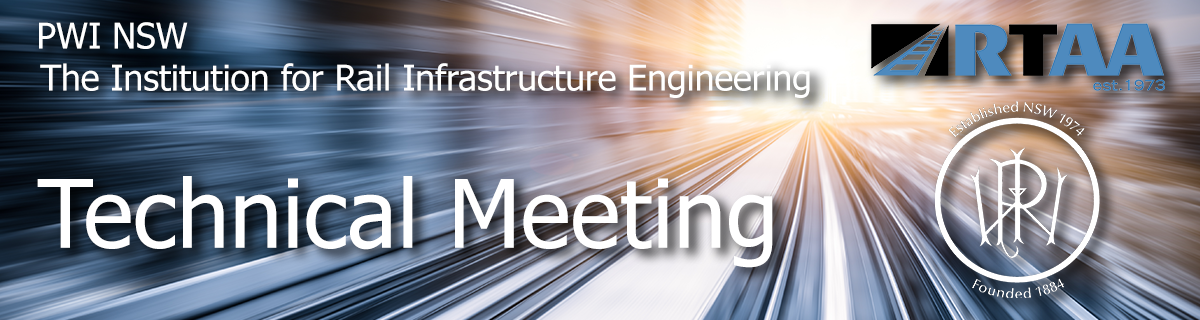
Inland Rail – Stockinbingal to Parkes (Daroobalgie Loop and Wyndham Avenue).
This technical presentation offers an overview of the Inland Rail program, with a focus on current project progress. It will delve into the Stockinbingal to Parkes section, highlighting the detailed design of key infrastructure elements including the Daroobalgie Loop and the track lowering works at Wyndham Avenue Bridge. The presentation will outline the project’s scope and objectives, examine the engineering challenges encountered, and showcase the innovative solutions implemented to enable double-stacked train operations.
Presenters
 |
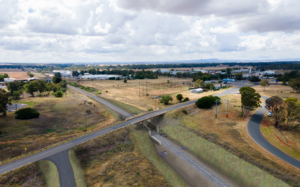
Penny Campbell is an Associate Design Manager at WSP Australia, based in the Sydney (George St) office. With a pivotal role in the T&I Rail, Maritime and Freight NSW/ACT team, Penny brings a wealth of experience in multidisciplinary rail infrastructure design and project delivery. Her leadership and technical insight have been instrumental in advancing complex transport projects across the region. Penny is currently involved in the Inland Rail – S2P project, where she has contributed to design coordination and stakeholder engagement. Her commitment to engineering excellence and collaborative delivery makes her a valued contributor to the industry and a compelling speaker at this year’s PWI presentation. |
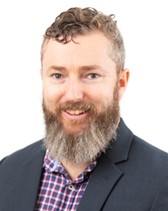 |
Nicholas Linford is an Associate Civil Engineer with over 20 years of experience in engineering consulting, including the past five years at WSP. Based in Newcastle, NSW, Nicholas leads civil and road design across major infrastructure projects, with a strong background in both urban development and transport sectors. His expertise spans the full project lifecycle, from master planning and concept design through to delivery, across roads, drainage, sewer, water supply, WSUD and utilities coordination. Nicholas is known for his collaborative approach and strong communication skills, which have proven invaluable in managing multidisciplinary teams and engaging with clients, contractors, and stakeholders. Recent projects include leading road design for the Central Coast Highway Duplication (Tumbi to Bateau Bay) and civil design leadership roles on the Inland Rail program and Southern Program Alliance in Victoria |
 |
Soodabeh Ghahremani is a seasoned rail industry professional with over 15 years of experience spanning track engineering, asset management, design leadership, and the delivery of complex rail infrastructure projects. Currently serving as the Design Manager on the IR A2P Project at ARTC, she specializes in design management, safety improvements, and project execution strategies that enhance network efficiency and reliability. Soodabeh holds a Master’s degree in Track Engineering and has contributed to a variety of organizations across Australia. Her career reflects a strong commitment to innovation, continuous improvement, and staying at the forefront of emerging trends and best practices in rail engineering. She is passionate about professional development and fostering collaborative, safety-focused project environments. |
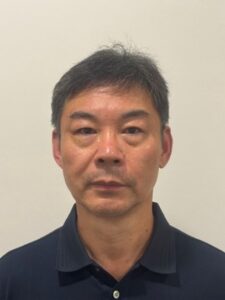
Dr. Hongtao Zhu received his PhD from Northeastern University, China, in 2000 and is currently an Associate Professor at the University of Wollongong. He is widely recognized for his expertise in contact mechanics, tribology, and the rail-wheel interface. He leads the “Contact Mechanics and Damage of Rail/Wheel System” research team, which has gained both national and international recognition. He has been awarded 8 Australian Research Council (ARC) Discovery and Linkage Projects and serves as a Chief Investigator on two ARC Industrial Transformation Training Centres. Driven by industry needs, his research has led to practical applications through 14 industry-funded projects. He has made significant academic contributions, publishing over 230 peer-reviewed papers in leading international journals, with a Scopus h-index of 39.
The birth of squats – early mechanism and the link to train operations
To implement effective preventive and early corrective measures for squat initiation and early-stage growth, it is essential to understand the causes of squats in railway networks. Squats predominantly occur on tangent tracks, shallow curves, and within switch and crossing zones, appearing in seemingly random locations. They are found across all track types; passenger, freight, or mixed traffic; both high-speed and conventional lines, and on both standard carbon (SC) and head-hardened (HH) rails.
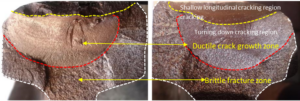
The occurrence of squats was analyzed in relation to traffic operation parameters and track geometry. Detailed metallurgical examinations of ex-service rails indicated a link between the presence of brittle White Etching Layers (WELs) and the development of squats within the rail running band. It has been found that different rail grades exhibit significant variation in the formation and evolution of WELs. Under comparable loading and traffic conditions, WELs were found to form earlier and evolve more rapidly in HH rails compared to SC rails. These findings provide valuable insights for selecting appropriate rail grades to mitigate squat defect formation and inform the design of rail materials for enhanced performance and durability in railway systems.
Membership
To attend PWI NSW functions you must be a current financial member or corporate representative or guest. Please refer to the membership page for all memberships including corporate membership.
If you are not currently a member of PWI NSW you can join via our Membership page. Upon joining you will receive a Login ID and password to register for events.
For any queries please contact info@pwinsw.org.au