- This event has passed.
Date: Wednesday 13th May 2026
|
|

PWI-AUS hold regular RECK’s to provide members with a technical focus and enhance knowledge sharing.
For Sponsorship opportunities, please contact the PWI @ reck@pwinsw.org.au
RECK proudly presented by : |
 |
Implementation of Innovative Earthworks Treatments: How to Save Time and Money
Dennis Reeve, MIEAust, CPEng, Principal Geotechnical Engineer from Geotechnology

Dennis has over 25 years of post-graduate experience in the mining and civil industries in Australia, New Zealand, UK, Africa and Fiji. Dennis is a MIEAust, Chartered Professional Engineer (CPEng) and RPEQ.
The bulk of Dennis’ experience has been on civil and mine infrastructure projects, railway projects and undertaking construction supervision. Experienced in all aspects of projects from early phase optimisation, geological mapping, site investigations, analysis and design, implementing innovative solutions and construction support.
Dennis leads teams to solve complex geotechnical problems by understanding the geomechanical controls for the proposed works, and then defining methods to reduce or eliminate those conditions to provide safe and robust outcomes.
Presentation Details
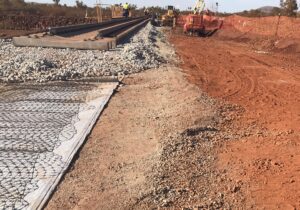 Geotechnical assessment of historical railway formations often identifies materials that do not conform to current earthworks specifications. While the traditional approach involves complete removal and replacement with new materials, this process is time-consuming and carries a significant environmental impact. Significant enabling works and post-shut remediation is typically required.
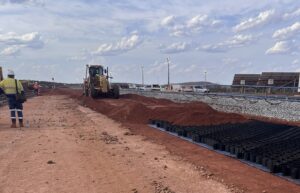
An alternative is to incorporate geosynthetics—such as geogrid reinforcement, geofabric filter layers, geocomposites, and geocells—to mitigate the impacts of non-conforming characteristics. When properly designed, these treatments can minimize the need for extensive earthworks and provide equivalent long term improvements to track performance. Success requires identifying and minimising the impacts of geotechnical characteristics and ensuring effective surface and groundwater drainage.
These treatments have been successfully applied on several heavy haul railways across diverse ground conditions, significantly reducing downtime and providing effective performance increases, with some sites handling over 1 billion tonnes of traffic. This discussion will explore these methods in detail, highlighting lessons learned during the development and implementation of these innovative treatments.
Railway Engineering Community of Knowledge
The original PWI Lunch and Learn sessions were launched in 2024, building a community for industry experts to share their knowledge on Rail Infrastructure Engineering and a great Continuous Professional Development(CPD) opportunity for all!
The topics can cover technical research, project delivery or novel technology; the first ever event covered the delivery of a major rail infrastructure project with the subsequent session on the technical intricacies of turnouts.
The key difference to other PWI chapter events is this event spans all states and wider, looking to connect like-minded professionals from different rail infrastructure managers for the benefit of the rail industry as a whole; with internationally delivered presentations also planned.
This is achieved by holding the events on line via Microsoft Teams, typically every 8 weeks.
For any queries relating to RECK sessions please contact us on reck@pwinsw.org.au