- This event has passed.
Date: Thursday 17th Sept 2026
|
 |
PWI-AUS hold regular RECK’s to provide members with a technical focus and enhance knowledge sharing.
For Sponsorship opportunities, please contact the PWI @ reck@pwinsw.org.au
RECK proudly presented by : |
 |
“Off the Beaten Track”
This “Full-Fat” RECK will explore Signalling, Electrical, and Rolling Stock disciplines.
 |
ChairKeynote PresentationSignalling PresentationRolling Stock PresentationElectrical Presentation |
Neil HobdenSteve Naumovski – PWI NationalisationChetan Watel, Signalling Engineering Manager, PTA.Andre Volpato, Mechanical Engineer, Rail ConfidenceKeivan Pakfar – Fyfe |
PWI Nationalisation / Overview of PWI Engineering Diversity
Steve Naumovski
Signalling – What’s the point
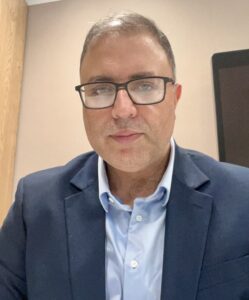 Chetan Watel is the Signalling Engineering manager for the Public Transport Authority (PTA) in Western Australia.
He is accountable for management of signalling systems for the PTA including train control and Automatic train protection system.
This includes overarching accountability for engineering standards and maintenance delivery for the signalling systems of the PTA
Chetan has undertaken work in the field of signalling design, construction, maintenance, testing and commissioning in India and the UK prior to working with the PTA. His experience ranges from conventional fixed block signalling systems as well as modern signalling systems.
In addition to the management of the current signalling system for the PTA , Chetan is also a member of the High-Capacity Signalling (HCS) alliance leadership team , which is deploying a Communication based Train control (CBTC) system on the PTA network.
Presentation
Signalling – What’s the point
Track engineers build the railway. They design it, maintain it, renew it and keep it standing after everything the environment, operations and budget constraints throw at it. Which raises an interesting question:
If we’ve already built the railway, what exactly is signalling for?
This presentation takes a light-hearted look at the age-old relationship between track and signalling. We’ll explore why signalling engineers insist on putting equipment next to perfectly good railway lines, why they become nervous whenever someone mentions tamping, and why they seem to have an opinion about everything despite not laying a single metre of rail.
Through practical examples, operational stories and a few uncomfortable truths, we’ll examine how signalling contributes to safety, capacity, performance and maintenance access. We will also challenge the notion that signalling is simply there to stop trains crashing into each other.
The session aims to answer a deceptively simple question:
Is signalling an essential part of the railway, or just a very expensive way of making life difficult for track engineers?
BEFORE THINGS GO OFF THE RAILS: SHEDDING LIGHT ON DYNAMIC VEHICLE SIMULATION

Andre Volpato is a Mechanical Engineer and Consultant at Rail Confidence, specialising in rolling stock simulation, vehicle dynamics, and technical assurance. Over five years, he has supported complex certification and acceptance programs, applying advanced modelling and wheel–rail analysis to help operators and asset owners deliver safe, compliant, and high-performing rail systems.
Presentation
BEFORE THINGS GO OFF THE RAILS: SHEDDING LIGHT ON DYNAMIC VEHICLE SIMULATION
The early stages of rolling stock design carry the highest technical and commercial risk, yet dynamic performance assessment is still often treated as a late‑stage compliance activity. This sequencing creates a vulnerability referred to in this paper as the compliance cliff, where critical wheel–rail interface behaviours are only discovered during final track testing or simulation, long after the vehicle has already been manufactured.
Standards such as AS 7508 and AS 7509 require proof of safety metrics that occur within the moving wheel–rail contact patch and are not easily captured during routine track testing. At the same time, it is not feasible to replicate the worst‑case track geometries required for compliance on operational networks. To resolve this verification gap, the paper discusses the benefits of the early use of a hybrid engineering approach in which targeted physical tests validate a high‑fidelity multibody dynamics model.
Simulation software packages provide the mathematical environment to represent masses, suspension components, wheel–rail contact mechanics and measured track geometry. Once validated, the model gains predictive ability, allowing engineers to evaluate hard to measure forces and explore design sensitivities early in the design process, before vehicle designs are finalised and manufacturing commences.
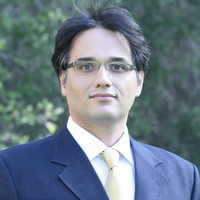
Keivan Pakfar – With over 21 years of experience in traction power, HV substations, and railway electrification, Keivan specialises in AC/DC traction power systems, CDEGS modelling, EMI&EMC, and Earthing and Bonding.
AC VS DC Earthing and Bonding
In this presentation, Keivan Pakfar will compare the earthing and bonding requirements of 25 kV AC and DC rail systems, highlighting key technical differences, design challenges, and practical design considerations
Railway Engineering Community of Knowledge
The original PWI Lunch and Learn sessions were launched in 2024, building a community for industry experts to share their knowledge on Rail Infrastructure Engineering and a great Continuous Professional Development(CPD) opportunity for all!
The topics can cover technical research, project delivery or novel technology; the first ever event covered the delivery of a major rail infrastructure project with the subsequent session on the technical intricacies of turnouts.
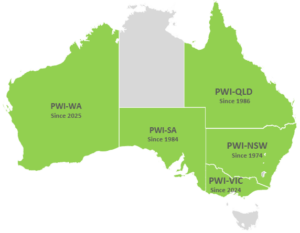
The key difference to other PWI chapter events is this event spans all states and wider, looking to connect like-minded professionals from different rail infrastructure managers for the benefit of the rail industry as a whole; with internationally delivered presentations also planned.
This is achieved by holding the events on line via Microsoft Teams, typically every 8 weeks.
For any queries relating to RECK sessions please contact us on reck@pwinsw.org.au